

Explained
Software and Applications Explained: Who Captures App-Layer Rent
Software turns expensive compute into paid workflows. Where app-layer rent sits — and why it runs on a different clock from fabs.
Writes Second Order by TKN — a plain-English map of AI infrastructure and semiconductors for non-specialist investors. Focus: who gets paid, where money sticks, and which step is stuck. Not investment advice.
Explained
Software turns expensive compute into paid workflows. Where app-layer rent sits — and why it runs on a different clock from fabs.
Explained
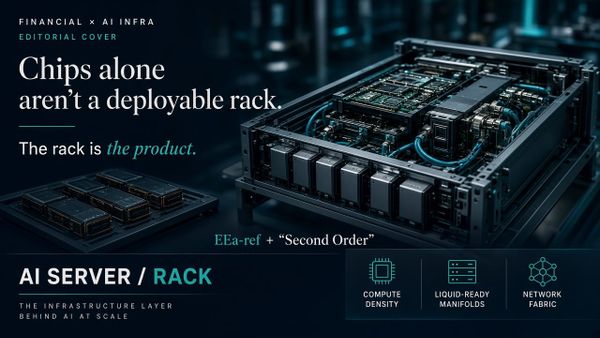
Servers turn chips, networking, and power into a deployable rack. This Map explains what fills the box — and when system lead times become the gate.

Explained
Speed-to-power is the clock from plan to live watts at the rack. Chip news alone misses this gate — and who gets paid when timed megawatts clear.

Explained
Data-centre REITs are landlords in the AI stack. They earn when timed power and long leases meet dense GPU demand — not from empty shells.
Explained
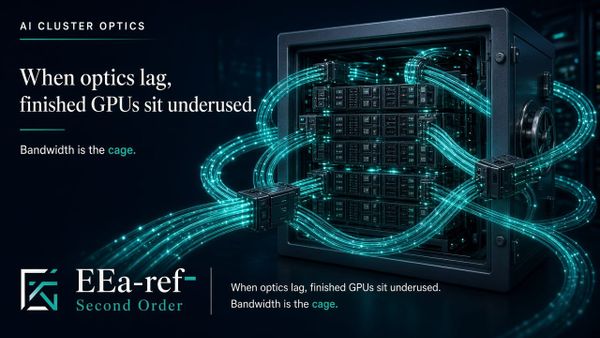
Optical networking is the bandwidth layer of an AI cluster. When fibre, modules, and switches lag GPU counts, finished chips sit underused.
Explained
A hyperscaler is a very large cloud and internet operator whose capital spending sets demand for the AI stack. How CapEx flows, and where money sticks.
Explained
HBM is high-bandwidth memory — tall stacks of DRAM beside an AI GPU. How it works, how generations differ, and where money sticks when it binds.

Explained
AI rack density is pushing data centres past air cooling. Cold plates, immersion, the CDU gate, and why cooling can cap live GPUs.

Explained
How AI infrastructure layers turn chip demand into second-order opportunities across power, cooling, networks and capital for global investors.