Australia sets a 30 MW grid rule for data centers, in force now
Australia's energy rule maker made every data center load of 30 MW or more meet fixed grid standards from 12 November 2026, moving the time and cost of proving a campus stays online through faults onto the developer before connection.
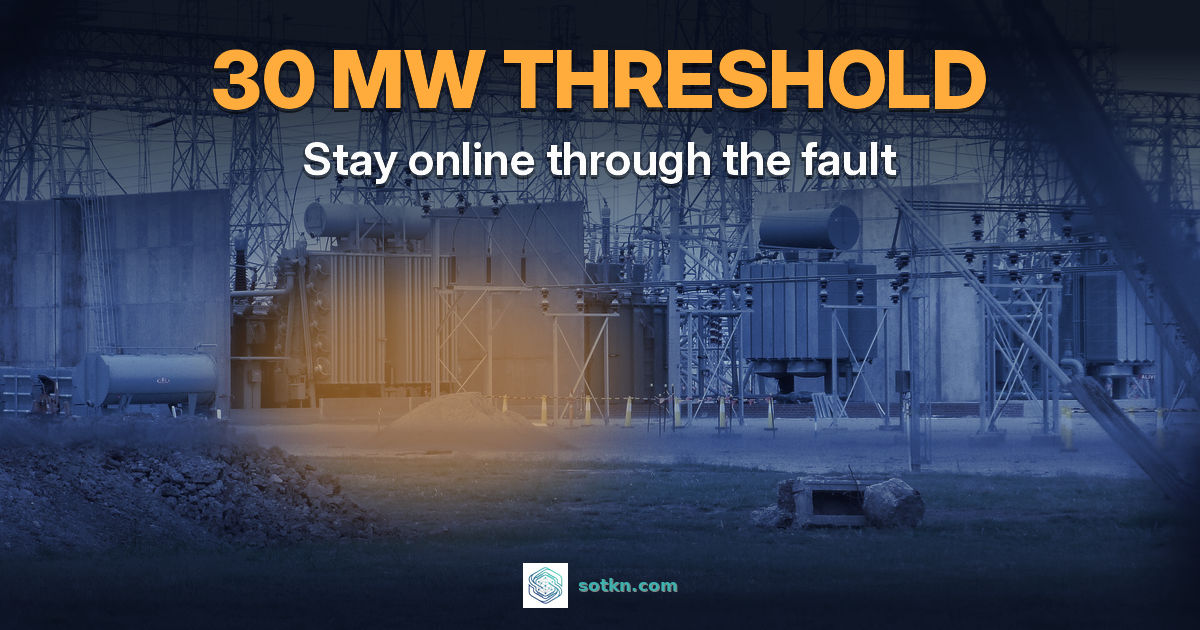
Australia's energy rule maker has made every data center of 30 MW or more meet a fixed set of grid standards from 12 November 2026, which means the time and cost of proving a campus can stay online during a fault now sits with the developer before connection, not with the grid after it.
What happened?
- The rule: On 12 November 2026 the Australian Energy Market Commission (AEMC) published the National Electricity Amendment (Improving the NEM access standards – Package 2) Rule 2026 No. 10. It commenced the same day. The rule covers the National Electricity Market, the grid that runs through Australia's eastern and southern states.
- The threshold: A "large inverter-based load" is now any load that uses power electronics with a nameplate rating of 30 MW or more. Large data centers fall into this group. For these loads the full set of Schedule 5.3 access standards applies automatically, whether the campus connects to the transmission or the distribution network. Below 30 MW, the network business may still apply them if a connection could harm the power system.
- What a large load must now do: stay connected through set voltage and frequency disturbances and recover its power use afterwards (ride-through), detect and respond to certain kinds of instability, give the network its ride-through data on request, and, for loads that are not registered market participants, commit in the connection agreement to keep meeting their performance standards. Uninterruptible power supply systems, which the AEMC notes are commonly used by data centers, are assessed under the load standards.
- Clusters count: Network businesses must assess nearby loads together where their wiring and operation mean they behave as one. If a cluster adds up to 30 MW or more, it can be treated as one large load.
- The grace period: Applicants whose technical requirements were already accepted, but who have not yet received an offer to connect, can keep negotiating under the old standards until 12 May 2027. If the offer has not been made by then, the new standards apply.
- The same day: The AEMC also opened consultation on a second rule change, requested by the Australian Energy Market Operator (AEMO), on real-time visibility of large loads, including possible mandatory registration of data centers. Submissions close on 17 December 2026.
Why does it matter?
The direct signal: grid access for a data center now has a defined test. Before this rule, there was no clear line for when a big load had to meet the full technical standards. The AEMC says the rule removes reliance on a 5 MW figure in an AEMO guideline that was only ever meant to decide when system strength checks apply. The draft rule had proposed a three-tier test for distribution-connected loads. The final rule replaces all of that with one number, 30 MW, applied to both transmission and distribution connections. In its own words, "once a customer is big enough to materially affect the grid, it must be treated as part of that grid," said AEMC Chair Anna Collyer.
Almost every project in the queue is caught. AEMO's data on the current data center connection queue shows about 91% of data centers seeking connection in the market, excluding Queensland, have a proposed capacity above 30 MW. The determination counts 223 of them. Our arithmetic: that implies roughly 245 projects in the queue the AEMC could see. So this is not a rule for a few outliers. It sets the terms for nearly the whole pipeline.
Why the regulator moved now. The AEMC cites AEMO's 2026 Electricity Statement of Opportunities, which projects data center use in the market rising from about 5 terawatt-hours to about 34 terawatt-hours over the next decade, and from about 3% to about 13% of operational demand. Its determination lists what happens when large loads trip together. In Virginia on 10 July 2024, a lightning-related fault on a 230 kV line was associated with about 1,500 MW of data center load dropping off, across around 60 data centers. In Ireland on 6 June 2026, a reactor-related disturbance near Dublin was associated with a 480 MW fall in data center demand, about 52% of the relevant demand. When that much load leaves at once, the grid has to correct for it, and the correction can cause the next problem.
The second-order signal: the cost moves upstream into the build. Ride-through and instability monitoring are not free. They come from the design of the campus's power train: its uninterruptible power supplies, its protection settings, and the controls that decide when the site switches to batteries or backup generation. A developer now has to model and prove that behaviour before it gets a connection offer. That adds engineering work, and possibly equipment, at the stage when money is spent and nothing earns yet. The AEMC checked the 30 MW line against Texas, where the grid operator ERCOT uses a 75 MW threshold; the AEMC says the two are broadly comparable once each is measured against the size of its grid.
What does it change?
Near term (to 12 May 2027): two queues form. Projects that already had their technical requirements accepted get six months to receive an offer under the old standards. Everyone else designs to the new ones from today. Expect a push by advanced applicants to close their offers before May, and some redesign work for projects that miss it. Network businesses also take on new work, because they must now look at nearby loads as a group.
For campus design: the rule settles a question developers had to guess at. A data center with a 30 MW or larger load now knows which standards apply, which reduces one source of delay: case-by-case negotiation. But it raises the bar. Suppliers of power electronics, protection systems and grid studies sit on the paid side of this step, because the proof has to come from them. Campuses that also plan to supply flexibility to the grid get a small opening: the rule lets loads meet under-frequency load shedding duties by ramping down quickly where they can, instead of dropping in blocks.
Longer term (2027 and after): this rule is the first part of a larger package. AEMO must publish new modelling guidelines for large loads within 12 months of commencement, so by 12 November 2027. The visibility rule that opened today could add registration for data centers. A separate AEMC process on who pays for network upgrades triggered by large loads closed its first submissions on 5 November 2026, with a draft determination scheduled for April 2027. Australia's federal energy minister has also asked for a rule obliging data centers to contract firmed energy. Each step puts more of the cost of a large load onto the load itself. For a market where operators such as AirTrunk and NEXTDC are planning very large new halls, the grid connection is becoming a longer list of things to prove, not just a queue to wait in. Our AirTrunk Kurri Kurri piece covers the cost-recovery side, and our Australia market page tracks the rest.
What the rule does not tell us. The AEMC did not publish a cost per megawatt for meeting the new standards, and it did not say how many of the 223 queued projects already have their technical requirements accepted and so qualify for the grace period. Those two numbers decide how much this slows the queue in practice.
| Metric | Value | Source name | Date |
|---|---|---|---|
| Large inverter-based load threshold | 30 MW nameplate or more (transmission and distribution) | AEMC final rule | 12 Nov 2026 |
| Rule commencement | 12 Nov 2026 | AEMC final rule | 12 Nov 2026 |
| Grace period for advanced applicants | Old standards until 12 May 2027 | AEMC final determination | 12 Nov 2026 |
| Share of queued data centers above 30 MW | About 91% (excluding Queensland), 223 projects | AEMC, citing AEMO data | 12 Nov 2026 |
| Implied queue size | About 245 projects (our arithmetic) | AEMC figures | 12 Nov 2026 |
| Data center electricity use, NEM | About 5 TWh to about 34 TWh over the next decade | AEMO 2026 ESOO, cited by AEMC | 12 Nov 2026 |
| Data center share of operational demand | About 3% to about 13% | AEMO 2026 ESOO, cited by AEMC | 12 Nov 2026 |
| Virginia load loss, 10 July 2024 | About 1,500 MW, around 60 data centers | AEMC final determination | 12 Nov 2026 |
| AEMO modelling guidelines for large loads | Due within 12 months of commencement | AEMC final determination | 12 Nov 2026 |
| Visibility rule change submissions | Close 17 Dec 2026 | AEMC notice | 12 Nov 2026 |
What should we watch next?
- 17 December 2026: submissions close on the AEMC's visibility rule change for large loads. Whether operators and AEMO back mandatory registration for data centers will show how far the next step goes.
- AEMO's interim guidance: AEMO told the AEMC it would publish interim guidance to help large-load applicants through connection before its formal guidelines are updated. The date is not set; its detail decides how heavy the modelling burden is.
- 12 May 2027: the grace period ends. Any rush of connection offers before then, or projects reporting redesigns after it, will show the real cost of the rule.
- April 2027: the AEMC's draft determination on network upgrade cost recovery for large loads, which decides who pays for the wires behind the campus.
- What would weaken the catalyst: AEMO guidance that makes the modelling light and quick, or network businesses accepting existing data center designs as compliant with little change. Either would mean the new standards add paperwork rather than time.
Also on the tape
- 12 Nov: Quantum DC paused its plan for a 1,200 MW AI data center at Tungkillo in the Adelaide Hills and said it will not seek development approval this year, after community opposition (ABC News).
- 12 Nov: Malaysia will write into law a duty for data center operators to disclose electricity use and GPU imports; 55 of 117 approved data center projects have started operations, the trade minister said (Malay Mail, Bernama).
- 12 Nov: Foxconn reported July to September net profit of T$77.5 billion, up 34%, and said it expects high double-digit growth in AI rack shipments in 2027 while chips, memory and some components stay tight (Reuters).
- 11 Nov: GS Group and POSCO signed an AI data center partnership; GS plans 1.2 GW in phases from 2028 at Donghae, Korea, with a further 1.2 GW later (The Asia Business Daily).
FAQ
Does this rule stop new data centers connecting in Australia?
No. It sets the technical standards they must meet to connect. The AEMC says the aim is to let data center connections proceed efficiently and securely, without pushing costs or risks onto other electricity users.
Which data centers does it cover?
Any load using power electronics with a nameplate rating of 30 MW or more, connected to the transmission or distribution network in the National Electricity Market. Smaller loads can still be brought in by the network business, and nearby loads can be counted together.
What is ride-through?
The ability of a site to stay connected and keep drawing power through a short voltage or frequency disturbance, instead of switching off. When many large loads switch off at once, the sudden loss of demand can destabilise the grid.
What happens to projects already in the queue?
If their technical requirements were accepted before 12 November 2026 and they have not yet had an offer to connect, they can keep using the old standards until 12 May 2027. Everyone else follows the new standards now.
Takeaway: In Australia, a data center connection is now a test the campus has to pass on paper first, and nine in ten projects in the queue are big enough to sit it.
References
- AEMC, AEMC determination strengthens framework to address anticipated data centre impacts on the national electricity grid, 12 Nov 2026.
- AEMC, Rule determination: Improving the NEM access standards – Package 2, 12 Nov 2026.
- AEMC, National Electricity Amendment (Improving the NEM access standards – Package 2) Rule 2026 No. 10, 12 Nov 2026.
- AEMC, Information sheet: final determination, Improving the NEM access standards – Package 2, 12 Nov 2026.
- AEMC, Notice: Operational integration and visibility of large inverter-based loads (submissions by 17 December 2026), 12 Nov 2026.
- AEMC, Consultation paper: Operational integration and visibility of large inverter-based loads, 12 Nov 2026.
- ABC News, Quantum DC halts approval process of Adelaide Hills AI data centre, 12 Nov 2026.
- Malay Mail (Bernama), Malaysia to make data centre operators disclose power use, GPU imports under new law, 12 Nov 2026.
- Reuters via Investing.com, Taiwan's Foxconn bullish on outlook but warns about supply chain tightness, 12 Nov 2026.
- The Asia Business Daily, GS Group, POSCO form 'AI Data Center' alliance, 11 Nov 2026.