Fermi loses a 222 MW lease, gets $200M from a hyperscaler
Fermi's 222 MW TensorWave lease ended on 10 November 2026 and an unnamed hyperscaler prepaid $200 million for 600 MW under a non-binding letter, so Project Matador now has cash up front but still needs a signed lease before its 31 December land-lease deadline.
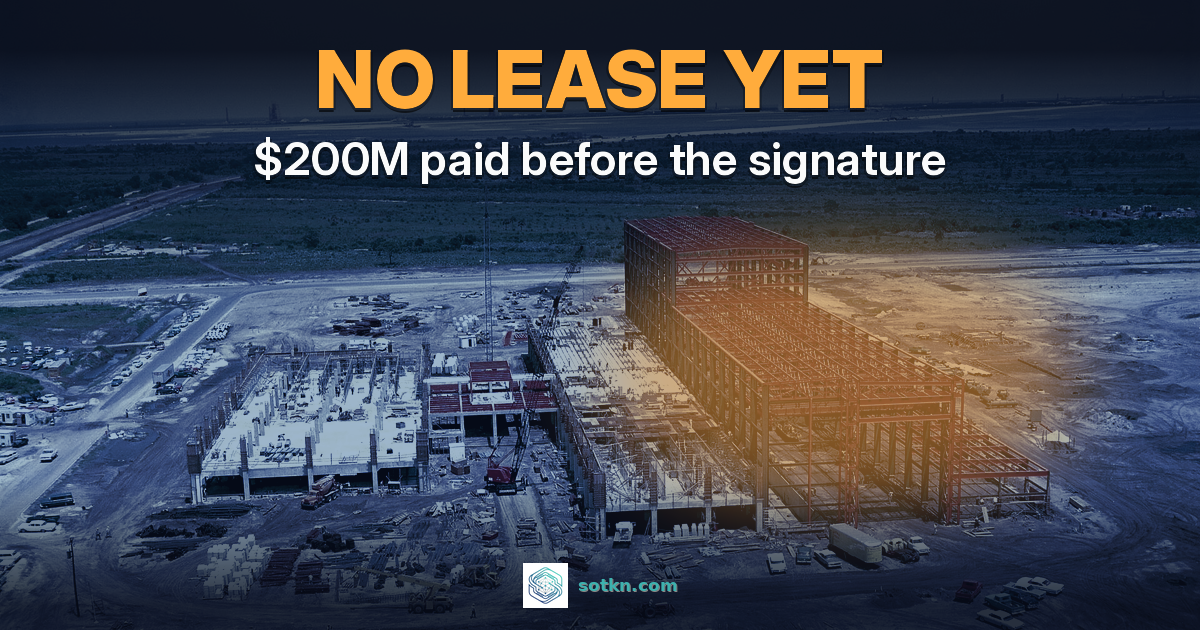
Fermi's first tenant lease at Project Matador, 222 MW for TensorWave, ended on 10 November 2026, and an unnamed investment-grade hyperscaler has instead prepaid $200 million to hold about 600 MW from 2027, which shows a large buyer will pay early for ready power but leaves the campus without the signed lease its land deal and lenders need by year end.
What happened?
- The old lease is gone. In its quarterly report filed on 12 November 2026, Fermi said the TensorWave lease, signed on 9 August 2026 for a build-to-suit data center at Project Matador, was terminated on 10 November "in accordance with its terms". The closing date of 31 October could have been extended to 31 December; it passed without extension. The AMD credit support agreement tied to TensorWave also ended.
- What that lease was worth. When it was announced on 10 August, Fermi said the first phase covered 222 MW of facility power, with phased delivery from the second half of 2027, and about $6.5 billion of contracted revenue over an initial 15-year term. Expansion rights could have taken the relationship above 650 MW.
- The new money. Also on 10 November, Fermi signed a non-binding letter of intent with an investment-grade hyperscaler for about 600 MW of "powered land" at Project Matador, plus a $200 million prepayment agreement and a $15 million early construction and site development agreement. A $90 million structural steel and building materials purchase agreement is still being finalised. The customer is not named, and the two sides are still working toward a definitive long-term lease.
- The quarter. At 30 September 2026 Fermi had $315.5 million of cash and restricted cash, $958.4 million of debt, net, and no revenue. Its third-quarter net loss was $141.6 million. Both the lease termination and the new agreements came after the quarter closed, so neither is in those numbers.
Why does it matter?
The direct signal: a hyperscaler paid before it signed. Fermi's chief executive said the customer committed more than $200 million up front, with a further $90 million contemplated, to get power on its timeline. A buyer of that size putting cash down ahead of a lease says that power-ready sites are scarce enough to reserve. That is the part of the news that tightens.
But the contract got weaker, not stronger. The TensorWave deal was described in August as a binding, turnkey lease: Fermi would build and deliver the data center and collect rent for 15 years. The new arrangement, in the quarterly report's words, is a non-binding letter of intent for powered land. Powered land means Fermi supplies the site and the power, and the customer builds the halls itself; the steel agreement points the same way, since it would let the customer use materials Fermi bought early for "multiple data center facilities". So the megawatts went up, from 222 to about 600, while the commitment went from a signed lease to a letter plus a prepayment. Fermi has not said whether the $200 million is refundable if no lease is signed.
The second-order signal: the lease is what unlocks everything else. Project Matador sits on land leased from the Texas Tech University System. The quarterly report says Fermi must receive a notice to proceed from the university by 31 December 2026 before vertical construction can start, and the university may end the ground lease if it does not. That notice depends on Fermi signing a lease with a Phase 1 tenant for at least 200 MW. A letter of intent is not a lease. The same date shows up in Fermi's debt: a $91.5 million equipment loan from Keystone must be prepaid if an approved customer agreement has not been received by 31 December 2026. And a $500 million turbine financing, with $444.9 million drawn at 30 September, becomes an event of default if Fermi has not closed fully committed financing for at least 400 MW of generation in the first phase by 10 February 2027. Lenders fund projects against signed leases from creditworthy tenants. Until this one is signed, the prepayment pays for work, not for certainty.
Who gets paid while it waits. The cash goes first to the people who build: site preparation under the $15 million agreement, and the steel and turbine suppliers whose equipment Fermi has already financed. Fermi had put about $1.67 billion into property, plant and equipment by 30 September. The landlord's own rent, which is where a data center developer is meant to earn its return, waits on the lease.
What does it change?
Near term (to 31 December 2026): the question moves from "will TensorWave close?" to "will the hyperscaler sign?". The quarterly report flags substantial doubt about Fermi's ability to continue as a going concern before management's plans, then concludes those plans ease it. A signed 600 MW lease would meet the 200 MW condition for the university's notice to proceed with room to spare. No lease by year end puts three things in play at once: the land-lease notice, the Keystone prepayment trigger, and the countdown to the February financing test.
For the AI Data Centers layer: the deal shape matters beyond one company. A turnkey lease puts the cost of building halls on the landlord and pays it back as rent. Powered land with a customer prepayment puts more of the building on the tenant and leaves the landlord selling power and acreage. For a site developer that is less capital to raise, but also less rent per megawatt and a customer that can walk until it signs. Our explainers on how a data center lease works and why prepaid cash is not yet revenue cover the mechanics, and the AI Data Centers layer tracks the landlords.
Longer term (2027): the release says the 600 MW starts in 2027. The TensorWave lease, by comparison, was due to start delivering in the second half of 2027. If a lease is signed in time, the campus could be powering a bigger first tenant on a similar schedule. If not, the steel and turbines bought early become the subject of the next negotiation, with lenders as well as tenants.
| Metric | Value | Source name | Date |
|---|---|---|---|
| TensorWave lease, first phase | 222 MW, about $6.5 billion over 15 years | Fermi press release | 10 Aug 2026 |
| TensorWave lease status | Terminated 10 Nov 2026; AMD credit support also ended | Fermi Form 10-Q and Form 8-K | 12 Nov 2026 |
| New customer commitment | Non-binding letter of intent, about 600 MW of powered land from 2027 | Fermi Form 10-Q and Form 8-K | 12 Nov 2026 |
| Prepayment and site work | $200 million prepayment; $15 million early construction | Fermi Form 10-Q | 12 Nov 2026 |
| Steel purchase agreement | $90 million, still being finalised | Fermi Form 8-K | 12 Nov 2026 |
| Megawatts versus old lease | About 2.7 times (our arithmetic) | Fermi filings | 12 Nov 2026 |
| Cash and restricted cash | $315.5 million at 30 Sep 2026 | Fermi Form 8-K | 12 Nov 2026 |
| Debt, net | $958.4 million at 30 Sep 2026 | Fermi Form 8-K | 12 Nov 2026 |
| Third-quarter net loss | $141.6 million; no revenue | Fermi Form 8-K | 12 Nov 2026 |
| Land-lease notice to proceed | Needed by 31 Dec 2026; requires a Phase 1 lease of at least 200 MW | Fermi Form 10-Q | 12 Nov 2026 |
| Turbine financing test | Committed financing for at least 400 MW by 10 Feb 2027 | Fermi Form 10-Q | 12 Nov 2026 |
What should we watch next?
- A signed lease, and a name. A definitive long-term lease with the hyperscaler, with its term and rent, is the one document that turns this from a reservation into revenue.
- 31 December 2026: the deadline for the Texas Tech University System notice to proceed, and for an approved customer agreement under the Keystone equipment loan. Watch for a signed lease, an extension, or a waiver before then.
- The $90 million steel agreement: whether it is finalised, and whether the $200 million prepayment is refundable. Neither was disclosed on 12 November.
- 10 February 2027: the date by which Fermi must close committed financing for at least 400 MW of first-phase generation under its turbine facility.
- What would weaken the catalyst: a signed lease with a named investment-grade tenant before year end would remove most of the deadline risk. A lapse of the letter of intent, or an extension of the land-lease date with no lease, would show the prepayment bought an option on power rather than a tenant.
Also on the tape
- 12 Nov: SMIC reported July to September revenue up 33.9% to $3.19 billion, with factory use at 97.3%, and guided fourth-quarter revenue up 4% to 6% from the third quarter (Reuters via Investing.com).
- 12 Nov: CleanMax and Neysa, a Blackstone portfolio company, signed an agreement with Andhra Pradesh for a 2 GW AI compute facility in Kurnool district, with commissioning targeted for March 2028 (The Economic Times).
- 13 Nov: Damac's chairman said the group has invested nearly half of its $20 billion US data center pledge and that development costs have risen about 30% (AGBI).
- 13 Nov: A Reuters review found more than 23 billion yuan, about $3.2 billion, of Chinese computing projects built around restricted Nvidia processors (Reuters via Investing.com).
FAQ
Did the hyperscaler replace TensorWave?
Not in the same form. Fermi's release does not link the two events. TensorWave had a signed lease for a building Fermi would deliver. The hyperscaler has a non-binding letter of intent for about 600 MW of powered land, backed by a $200 million prepayment and a $15 million site agreement, with no lease signed yet.
Is the $200 million revenue?
No. Fermi said the agreements had no effect on its 30 September accounts, and it remains pre-revenue. A prepayment is cash received before a service is delivered; it only becomes revenue as the service is provided.
Why does 31 December 2026 matter?
Under Fermi's ground lease with the Texas Tech University System, it needs a notice to proceed by that date before vertical construction, and the notice depends on a signed lease with a Phase 1 tenant of at least 200 MW. A Keystone equipment loan also requires prepayment if no approved customer agreement is in place by then.
Who is the hyperscaler?
Fermi has not named it. It describes the customer only as an investment-grade hyperscaler and says its identity remains confidential.
Takeaway: A hyperscaler will pay to hold power in Texas before it signs, but at Project Matador the signature, not the cash, is what the land deal and the lenders are waiting for.
References
- Fermi Inc., Form 8-K Exhibit 99.1: Fermi Announces New Agreements with Investment-Grade Hyperscaler and Third Quarter 2026 Financial Results, 12 Nov 2026.
- Fermi Inc., Form 10-Q for the quarter ended 30 September 2026, 12 Nov 2026.
- Fermi Inc., Fermi Announces Binding Lease Agreement with TensorWave, 10 Aug 2026.
- Investing.com (Reuters), SMIC third-quarter earnings beat estimates, 13 Nov 2026.
- The Economic Times, CleanMax to invest Rs 50,000 crore in AI compute, renewable energy projects in Andhra Pradesh, 13 Nov 2026.
- AGBI, Damac invests $9bn in US data centres despite rising costs, 13 Nov 2026.
- Reuters via Investing.com, Huang exit and US scrutiny imperil $3 billion in Chinese AI projects reliant on Nvidia, 13 Nov 2026.