Nebius acquires Inferize — cutting the idle GPU tax
Nebius acquired Inferize into Token Factory on 1 October. The cash bind is the idle GPU tax — spare seats are ready, not paid.
WIRE · NEOCLOUDS · GLOBAL · Data as at 1 Oct 2026
Nebius today said it has acquired Inferize, an inference-optimization company, and folded the team and technology into Nebius Token Factory — its managed inference platform. The cash bind Nebius named is not a new megawatt print. It is the idle GPU tax: cold starts, demand spikes, and mid-run weight updates leave assigned GPUs waiting, so platforms hold spare capacity just to hit service levels. On the neoclouds layer, spare seats that sit warm for readiness are not billed customer hours. Ready is not paid.
What happened
On 1 October 2026, Nebius (Nasdaq: NBIS) announced it has acquired Inferize. Inferize’s technology and team have joined Nebius Token Factory, Nebius’s managed inference platform for production AI (Nebius newsroom, 1 Oct 2026 — company). The same text went out on the regulatory wire as a Nebius Group corporate announcement dated 01-Oct-2026 / 13:00 CET (EQS, 1 Oct 2026 — company).
Nebius’s own framing of the problem is the Wire print:
| Figure / claim | Source | |
|---|---|---|
| Event | Nebius acquires Inferize; tech + team into Token Factory | Nebius, 1 Oct 2026 |
| Bind named | Cold starts leave assigned GPUs idle at launch, demand spikes, and mid-run weight updates (e.g. reinforcement learning) | Same |
| Platform response today | Hold spare capacity to hit service-level targets | Same |
| Stated aim | Cut the “idle GPU tax”; scale capacity closer to actual usage; higher utilization and better token economics | Same |
| Talent | Inferize founded Jan 2026; working prototype within three months; engineers join Token Factory | Same |
| Deal terms | Not disclosed | Same |
| Prior Token Factory layers (named) | Eigen AI (model / kernel / system); Clarifai core team + licensed inference / orchestration IP | Same |
Danila Shtan, Nebius CTO, said inference needs more than fast GPUs — the system must respond when demand changes, including how quickly additional capacity is ready. Guy Bortnikov, Inferize co-founder and CEO, said keeping spare GPUs running is the price of being ready for demand, and removing that cost is what Inferize was built to do.
This is a platform / utilization print, not a campus offtake and not a published GPU-hour rate card. Do not collapse “acquired Inferize” into “more billed hours already cleared.”
If this Wire saved you a search, tip Second Order → https://www.sotkn.com/#/portal/support
Why cash cares
On the neoclouds layer, cash clears when a customer uses a working GPU and pays for that hour — see What Is a Neocloud? and What Is GPU as a Service?. Seats idle for cold starts, or held warm as SLA spare capacity, are ready. They are not yet paid.
Nebius’s 1 October note puts a company name on that bind. Cold starts leave assigned GPUs idle at launch, on demand spikes, and when weights update mid-run. Platforms hold spare capacity to hit service levels. Inferize’s stated job is to cut that idle tax so capacity tracks usage more tightly and token economics improve.
Two cash clocks:
- Utilization. A GPU assigned but not serving a paying request is a seat already paid to power and cool. Cutting idle time moves more of that seat toward billed tokens — an operating print, not a new hall.
- Readiness vs revenue. Spare capacity held for SLAs is insurance. Insurance that never becomes a customer invoice is still a cost. Nebius is buying technology that claims to shrink how much insurance Token Factory must keep lit.
Who waits treats the acquire as if Token Factory revenue already stepped up on 1 October. Who can still get paid watches whether cold-start and scale latency fall on live endpoints — and whether utilization and token unit economics move. Ready is not paid.
Idle tax vs more megawatts
A capacity lease adds halls. An idle-tax cut tries to get more paid work out of halls already lit. Keep the clocks separate from AIB’s 30 September print: 50 MW of critical IT capacity for Nebius, 12-year term, 65 MW electric service agreement, two data halls, with customer prepayments plus project debt and preferred equity expected to fund a substantial share of development (AIB / GlobeNewswire, 30 Sep 2026 — company). That is a power-and-halls clock. Inferize is a utilization clock on Token Factory — it does not ship those halls; it claims to waste fewer GPU-hours while the fleet serves production.
Nebius disclosed no idle-hour percentage, no utilization delta, and no deal price. The Wire read is the mechanism named — spare GPUs as the price of readiness — not a made-up recovery rate.

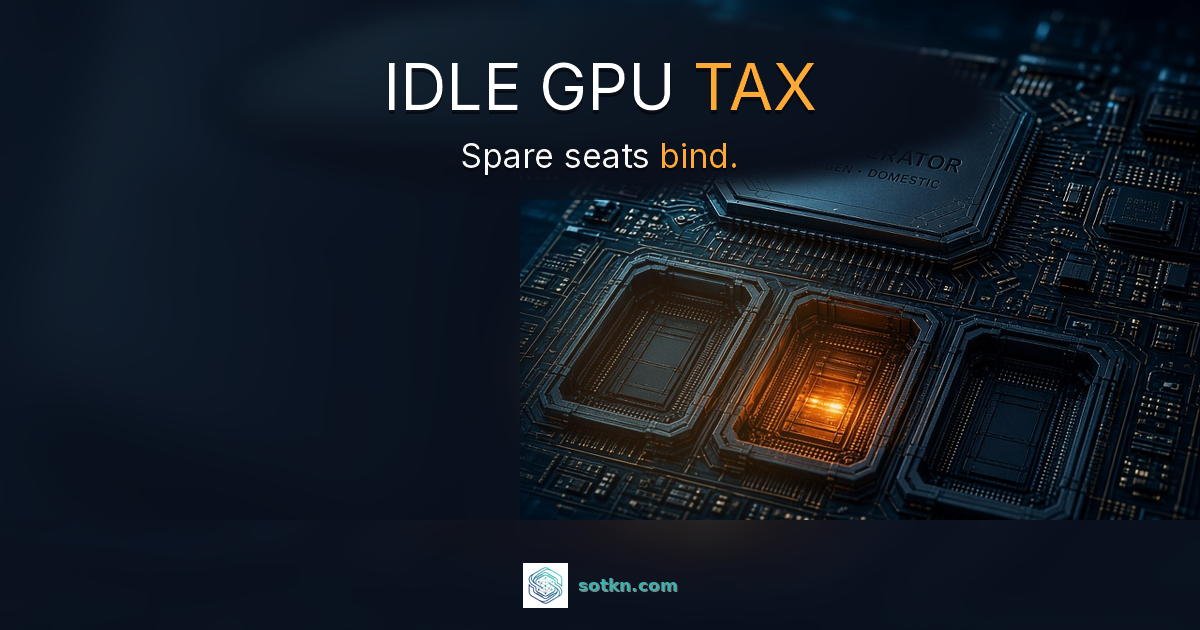
Figure — idle GPU tax bind. Cold start / scale / mid-run weight update → assigned GPUs idle → spare capacity held for SLAs. Amber only on the idle bind. Paid hour = customer request served on a working GPU.
The second-order read
| Who | Seat | What this means |
|---|---|---|
| Nebius Token Factory | Inference platform invoice | Buys tech to cut idle tax; push utilization / token economics |
| Inferize team | Systems talent into Token Factory | Jan 2026 founding; prototype in ~3 months; joins platform |
| Inference customers | Who pays for tokens / endpoints | Want elastic scale without forever-warm spare seats |
| Prior Token Factory layers | Eigen AI + Clarifai team/IP | Named by Nebius — Inferize is additive, not a replace |
| Hall / power landlords | Critical IT MW (e.g. AIB 50 MW) | Separate clock: dedicated capacity vs utilization of lit seats |
| Competing neoclouds | Same idle-tax problem | A software cut does not move their power interconnects |
Who gets paid. Nebius if Token Factory turns a larger share of lit GPUs into served, billed inference. Inferize’s founders get an exit (terms undisclosed). Upstream landlords still get paid on capacity contracts whether or not idle tax falls.
Who waits. Narratives that treat the acquire as a same-day revenue step-up, or “better token economics” as a published price-card cut. No utilization metric, no customer named, no disclosed consideration.
By clock. Halls / MW = AIB-class capacity (separate, 30 Sep). Platform layers = Eigen + Clarifai + Inferize inside Token Factory. Idle tax = assigned but unpaid GPU time. Billed hours = customer uses a working GPU and pays. Collapse them and the acquire looks like cleared cash. It clears a utilization bind toward cash. Ready is not paid.
Two cautions
Deal terms are not disclosed. Do not invent a price, earn-out, or share count. The newsroom / EQS text is the primary; secondary restatements add nothing on economics.
“Idle GPU tax,” “higher capacity utilization,” and “better token economics” are company aims, not measured post-close KPIs. Cold-start and scale claims need dated Token Factory metrics before they become a utilization print. Drop any secondhand figure the Nebius primary does not carry.
What would change the view
- Nebius publishing a dated Token Factory metric — cold-start latency, scale time, utilization, or token unit cost — before vs after Inferize integration.
- A disclosed purchase price or material filing line that sizes the bet.
- Evidence that spare-capacity buffers did not shrink, or that SLA breaches rose when buffers were cut.
- A peer neocloud publishing a comparable idle-tax cut with measured billed-hour impact.
What to watch
- Token Factory release notes after 1 Oct 2026 — Inferize-named features, cold-start or autoscaling claims with numbers.
- Nebius earnings / filings — any utilization, inference-mix, or acquisition accounting line.
- Price card — whether Token Factory list economics move, or stay a software claim only.
- Capacity clock — hall deliveries on the southeastern-US 50 MW (AIB) vs software utilization claims; keep the clocks separate.
- Peer response — other neocloud inference notes that name idle or cold-start cuts.
Read: Neoclouds, What Is a Neocloud?, Neocloud vs Hyperscaler, and What Is GPU as a Service?.
Get the Wire. A free brief every day, here and in your inbox. Subscribe free →
Sources: Nebius newsroom, 1 Oct 2026 — company (Inferize acquire; idle GPU tax; Token Factory; Eigen AI / Clarifai layers; terms undisclosed); EQS corporate announcement, 1 Oct 2026 — company (same text; 13:00 CET); AIB Data Centers / GlobeNewswire, 30 Sep 2026 — company (50 MW critical IT capacity agreement with Nebius; 12-year term; 65 MW ESA; two data halls; context only, separate capacity clock). Not investment advice.