Nebius lifts on-demand GPU hours up to 21%
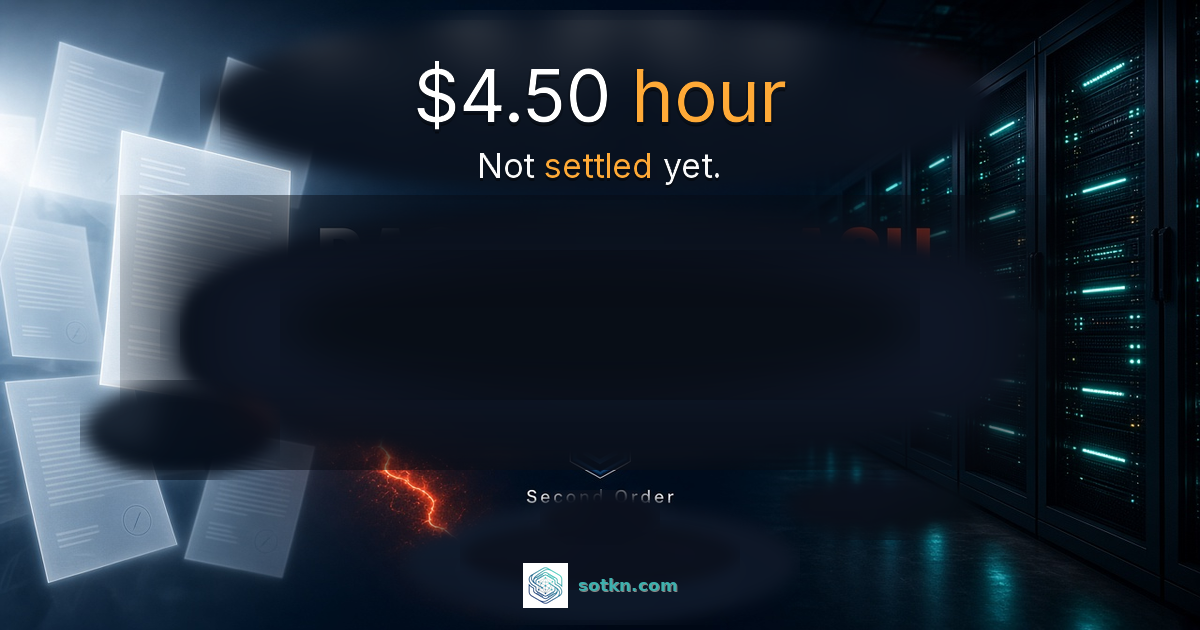
Nebius prices page (live 3 Oct): Oct 1 on-demand card H100 $3.85→$4.50, B300 $7.85→$9.50. A list hike is not collected cash.
WIRE · NEOCLOUDS · GLOBAL · Data as at 2–3 Oct 2026
Nebius’s public price page still prints two columns: the prior on-demand GPU-hour and a second column marked effective 1 October 2026. Selected Nvidia rows move 16.9% to 21.0% — H100 from $3.85 to $4.50, B300 from $7.85 to $9.50. On the neoclouds layer, a posted card is ready list. It is not settled invoice cash until customers bill and renew at the new walk-up. Ready is not paid.
What happened
Nebius’s prices page (live-checked 3 October 2026; FinanceFeeds confirmed both columns still visible on 2 October) posts an October 1 effective card that lifts on-demand rates on the accelerators customers are queued for. RTX PRO 6000 stays $1.80. GB200 and GB300 NVL72 racks stay contact us. Commitment discounts remain up to 35% off on-demand; spot floors print from $0.79 (H100/H200) and $0.99 (B200/B300).
Event
Nebius posts Oct 1 on-demand GPU-hour card — selected Nvidia rows +16.9% to +21.0%
nebius.com/prices live-checked 3 Oct 2026; FinanceFeeds 2 Oct — both columns still printed
H100 move
$3.85 → $4.50 (+16.9%) — prior-generation Hopper still dearer to rent
8×H100 × 720h list: ~$22,176 → ~$25,920 — list math, not invoices
B300 (top of range)
$7.85 → $9.50 (+21.0%) — “up to 21%” is this row
H200 $4.50→$5.40 (+20.0%); B200 $7.15→$8.50 (+18.9%)
CoreWeave $40M/MW (separate unit)
Q3 short contracts ~3–6 months at ~$40M per MW annualized
CoreWeave IR, 17 Sep 2026 — $/MW ≠ Nebius $/GPU-hour; do not invent H100-equivalent
Stuck step named
Utilization + billing at the new walk-up (and short-book contract performance)
Posted Oct 1 card ≠ settled invoice
Do not treat the right-hand column as what every customer already pays. FinanceFeeds noted GPU Finder’s Oct 2 tracker still mixed — some GPUs on the old column, H200 already on the new. A list hike is not collected cash.
Why cash cares
On the neoclouds layer, cash for walk-up GPU hours clears when hours are consumed and invoices clear at the rate the console bills — see Neocloud explained and Who finances GPU clusters?. A dual-column price page after the effective date is ready list talk. It is not yet paid. That gap is the whole Wire: Nebius can date the card 1 October, and still be waiting on utilization and billing when both columns sit on the same page.
Two cash clocks:
- Card vs bill. H100 $3.85 → $4.50 and B300 $7.85 → $9.50 are posted list moves. An 8×H100 box at 720 hours goes from about $22,176 to $25,920 on list math — before tax, storage, or a commitment discount, and not an invoice. Nebius gets paid if on-demand hours clear at the new walk-up; customers on older commitments, discounts up to 35%, or spot from $0.79/$0.99 are not paying $4.50 or $9.50.
- GPU-hour vs megawatt. CoreWeave’s 17 September IR print is short-dated contracts (~3–6 months) at about $40 million per megawatt of annualized revenue, plus >$25 billion net new commitments early Q3 (not in the 30 June backlog) and contracted power ~4.2 GW as of 11 August from ~3.7 GW at 30 June. That is a different unit from Nebius’s GPU-hour. Do not invent an H100-equivalent hour from MW. CoreWeave gets paid if those short contracts perform; the IR does not publish a public H100 card.

Figure — List hike bind. Posted Oct 1 card → utilization + billing at new walk-up → settled invoice. Amber only on the list / billing bind. Paid = Nebius if on-demand hours clear at the new list; CoreWeave if short MW contracts perform.
Context: second PAYG hike, letter language, and the short book
Reuters (17 September, as framed by FinanceFeeds) called this the second pay-as-you-go increase in about three months, with selected Nvidia rates up roughly 17% to 21%. The live card matches that range; “up to 21%” is the B300 row. Hopper getting more expensive to rent is not what surplus prior-generation hardware looks like — but scarcity on the card is still not cash in the bank.
Nebius’s August shareholder letter (via FinanceFeeds — label as letter, not the October event) put megawatt language next to the later list move: second-quarter deals averaged more than $20 million per megawatt; founder Arkady Volozh wrote of a price opportunity in the $40–50 million per MW range and that Nebius signed a first deal in that band that week. Separately: “We could sell our entire 2027 capacity on these terms today.” That is not a disclosure that every 2027 megawatt is pre-sold at $40 million. CoreWeave’s Q3 short book near $40M/MW sits on the bottom edge of the band Nebius said it was already clearing on short-term capacity in August — same scarcity read, different instrument, different clock.
Most neocloud revenue is still priced as annual contract value per megawatt, not off the public walk-up page. The October card tests whether firm on-demand capacity still clears dearer; it does not rewrite the contract book overnight.
The second-order read
Who gets paid. Nebius — if on-demand hours clear at the new list. CoreWeave — if the ~$40M/MW short contracts perform. Commitment and spot customers sit on other prices; they are not proof the walk-up hike collected.
Who waits. Narratives that treat the right-hand column as already-billed ASP, that invent an H100-equivalent from CoreWeave’s megawatt print, or that read Volozh’s “could sell entire 2027” line as a pre-sold backlog disclosure. Anyone treating a dual-column page after October 1 as settled cash.
By clock. Card effective = 1 Oct (both columns still printed 2–3 Oct). CoreWeave short-book IR = 17 Sep. Letter megawatt language = August. Settled cash = utilization + billing (and contract performance on the short MW book). Collapse them and a list hike looks like a settled invoice. It clears a billing bind toward cash. Ready is not paid.
Stuck step. Utilization + billing at the new walk-up — and whether CoreWeave’s short contracts clear at ~$40M/MW. How cleanly GPU Finder and the console converge on the new column is the near-term read — not Nebius’s already-booked contract revenue.
Two cautions
The announced October 1 column is not yet the only column. FinanceFeeds’ Oct 2 check and the live page on Oct 3 still show the prior on-demand figures beside the new ones. GPU Finder was mixed (H200 new; H100/B200/B300 still showing old on one snapshot). Do not invent that every customer already pays $4.50 or $9.50.
Do not convert CoreWeave’s $40 million per megawatt annualized short-contract print into a Nebius GPU-hour, or treat August letter language about 2027 capacity as an October disclosure that the book is pre-sold. Same scarcity season; different units and clocks.
What would change the view
- Evidence October on-demand hours bill at the new column (or stay stuck on $3.85 / old list).
- A Nebius reprint that drops the October 1 column, or console/tracker convergence that retires the dual-column ambiguity.
- CoreWeave follow-through: short-book performance, backlog recognition of the >$25B early-Q3 commitments, or a dated public GPU-hour card.
- Spot floors rising toward list — or clearing so far under that the hike is a discount under another name.
- A dated statement that walk-up volume is immaterial next to locked commitments (then the card is a signal, not the P&L).
What to watch
- nebius.com/prices — whether the left-hand prior column disappears, and which rates the console bills in October.
- Third-party trackers (e.g. GPU Finder) — convergence on the new column vs mixed prints.
- CoreWeave next IR / earnings — short-contract mix, $40M/MW follow-through, contracted power vs backlog recognition.
- Commitment vs walk-up mix — how much revenue still clears off the public card versus multi-month reserved clusters.
- AWS capacity-block reserved rates (FinanceFeeds context) — separate product; useful scarcity cross-check, not a Nebius invoice.
Read: Neoclouds, Neocloud explained, and Who finances GPU clusters?.
Get the Wire. A free brief every day, here and in your inbox. Subscribe free →
Sources: Nebius prices page — live-checked 3 Oct 2026: dual columns; H100 $3.85→$4.50; H200 $4.50→$5.40; B200 $7.15→$8.50; B300 $7.85→$9.50; RTX PRO 6000 $1.80; spot floors; up to 35% commitment discount; FinanceFeeds, 2 Oct 2026 — card confirmed; both columns Oct 2; GPU Finder mixed; 8×H100 list month math; Reuters 17 Sep second PAYG ~17–21%; August letter $20M+/MW and $40–50M/MW opportunity (not Oct event); CoreWeave IR, 17 Sep 2026 — Q3 short contracts ~3–6 months ~$40M/MW; >$25B net new early Q3; contracted power ~4.2 GW Aug 11 from ~3.7 GW Jun 30. Not investment advice. Do your own research.