

Explained
Who Are the Neoclouds? Specialist GPU Clouds, and Who Gets Paid
The neoclouds are specialist GPU clouds. CoreWeave, Nebius, Lambda and peers get paid on live hours; signed TCV is not cash. Nvidia, landlords and lenders are paid first.
Explained
Mechanism explainers for the AI stack — what a part is, why it binds, who gets paid. Free teaching desk on Second Order.
Get the Wire
Explained
The neoclouds are specialist GPU clouds. CoreWeave, Nebius, Lambda and peers get paid on live hours; signed TCV is not cash. Nvidia, landlords and lenders are paid first.

Explained
AI data centers are paid for in a relay: equity and short construction loans build the halls, then cheaper bonds, securitisations or a REIT take over once the rent starts. The stuck step is the handoff in between.

Explained
Tokens are how a cloud bills the model. GPU hours are how it bills the card. They only match at a conversion ratio — billed tokens per live GPU-hour.
Explained
The hyperscalers are the few companies that build and run computing at the largest scale. Four US names spent about $166 billion on capacity in one quarter. Chips, landlords and power get paid first; the buyers wait on power-ready halls.
Explained
High-NA EUV is the 0.55-numerical-aperture scanner that prints tighter layers on a smaller field. ASML is paid when an EXE is recognised; the foundry waits on stitching, or on a larger mask.

Explained
Total contract value is the dollar sum of revenue a GPU-cloud operator has signed across the committed term. It is measured at signature, not when the cluster is delivered.
Explained
A chiplet is a small die designed to be joined with other dies in one package. AI chips are now built this way because one die has hit its size limit. The foundry is paid for every piece; the packager is paid for the join, and the join is where supply is short.
Explained
Building the hall costs about $14M–$18M per megawatt before chips. The GPUs cost about twice that again. Who gets paid, in what order, and why the stuck step is the cash spent before rent starts.
Explained
AI GPU buyers are the companies that pay for accelerators. Nvidia split $48.7B hyperscale and $40.3B ACIE in the July quarter. Who pays, and where cash sticks.

Explained
Sovereign AI is AI computing power, data and models a country keeps inside its borders and under its own laws. Governments rarely run the GPUs; regional neoclouds and telcos do. Nvidia is paid when the chips ship. The operator is paid only when someone signs for the hours.
Explained
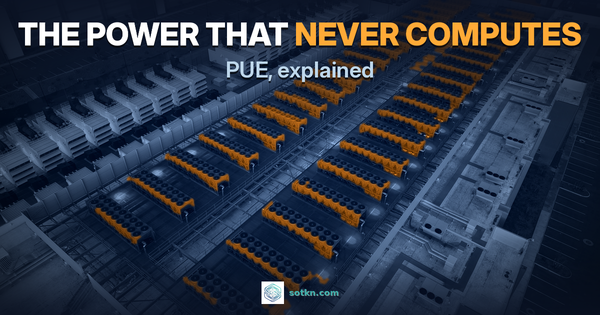
PUE is a data center's total energy divided by its IT energy. The industry averaged 1.52 in 2026; Google ran 1.09 in 2025. With the grid connection fixed, PUE decides how many megawatts a hall can lease, and the tenant usually pays for the overhead.
Explained
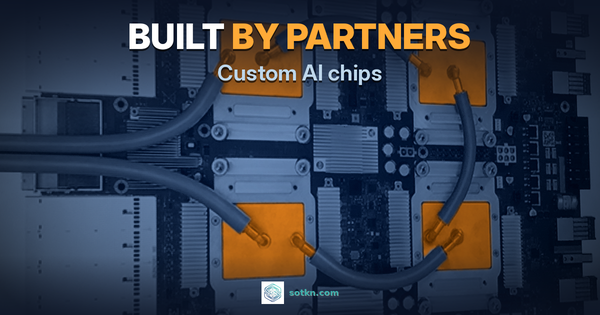
A custom AI chip is designed by the company that will run it, then built with a design partner that turns it into a chip TSMC can make. Broadcom, Marvell, Alchip, GUC and MediaTek do that job. They get paid when chips ship; the owner gets paid only once they run.