What Does Keppel DC REIT Do? The Singapore Data-Centre Landlord Model
Keppel DC REIT is a Singapore-listed trust that owns 25 data centres in 10 countries, 62.8% of its assets in Singapore, and passes the rent on as distributions. In 1H 2026 distributable income rose 18.5% to S$150.7m and DPU rose 11.3% to 5.714 cents.
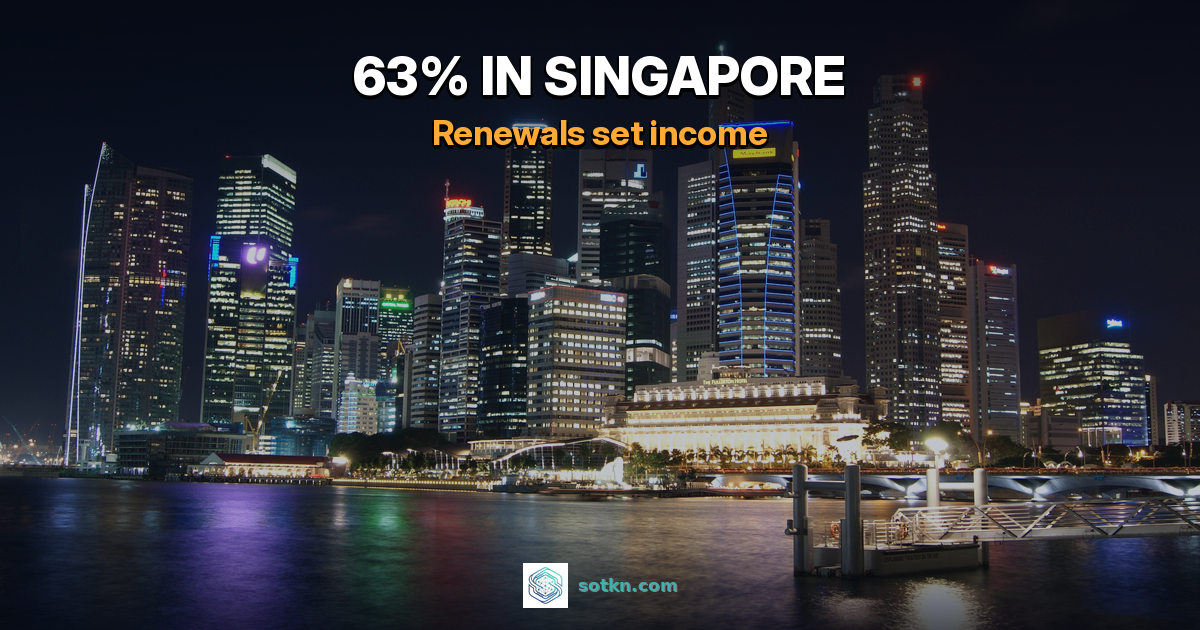
Keppel DC REIT is a Singapore-listed trust that owns 25 data centres in 10 countries and passes most of the rent on as distributions. It has about S$6.3 billion of assets, 62.8% of them in Singapore. In the first half of 2026 distributable income rose 18.5% to S$150.7 million, and distribution per unit rose 11.3% to 5.714 cents.
AI DATA CENTERS · Data as at 23 Jul 2026 · Next update: after Keppel DC REIT's 2H 2026 results
Affects: AI Data Centers · Singapore · Australia · Hyperscalers
Keppel DC REIT is an Asia angle on the AI Data Centers layer: it owns finished halls, mostly in Singapore, and collects the rent. A REIT (real estate investment trust) is a listed trust that owns property and pays out most of its income. Read What Is an AI Data Center? first, then compare it with Digital Realty, Equinix and Australia's NEXTDC.
In short: Keppel DC REIT owns data centres, leases them to cloud, network and enterprise clients, and distributes the income to unit holders twice a year. In 1H 2026 its rent income (gross revenue) was S$242.0m, net property income S$210.4m, and distributable income S$150.7m. The model works while the short colocation leases keep renewing at higher rent. It strains if Singapore's power rules, or a few big expiries, bite.
Education only, not advice to buy or sell any security. Figures are from Keppel DC REIT's 1H 2026 results filings, dated as shown. All S$ figures are Singapore dollars.
Numbers that matter
Distribution per unit, 1H 2026
5.714 cents
+11.3% on 1H 2025; paid 18 Sep 2026 · 23 Jul 2026
Paid
Distributable income
S$150.7m
+18.5%; units in issue also grew about 8.8% (our arithmetic) · 1H 2026
Paid
Singapore share of assets
62.8%
Of about S$6.3bn assets under management; Japan is 13.4% · 30 Jun 2026
Concentrated
Occupancy
92.5%
95.3% without the Cardiff data centre; about 95% of power capacity contracted · 30 Jun 2026
Filled
Average lease length
6.7 yrs vs 4.5 yrs
By lettable area against by rental income · 30 Jun 2026
Watch mix
Aggregate leverage
34.0%
About S$673m of headroom to a 40% internal limit; average cost of debt 2.6% · 30 Jun 2026
Funded
Status chips are Second Order's read. The results documents do not name the REIT's tenants or give total megawatts, so we do not.
What does Keppel DC REIT actually do?
Three steps, in order.
Own. Lease. Pass on.
- It owns finished halls. 25 data centres across 10 countries, valued at about S$6.3bn. Asia-Pacific is 84.6% of assets: Singapore 62.8%, Japan 13.4%, Australia 4.4%, China 3.7% and Malaysia 0.3%. Europe is 15.4%.
- It leases them under three kinds of contract. In colocation, many clients rent racks and the leases are short: 74.1% of rental income, with a 2.8-year average remaining lease. In single-tenant fully-fitted halls, one client takes the whole building for longer: 21.0% of income, 9.1 years. In shell and core, the client fits out the inside: 4.9% of income, 6.8 years.
- It passes the income on. It declares distributions every half year. For 1H 2026 it declared 5.714 cents a unit, after setting aside capex reserves. It is managed by Keppel DC REIT Management and sponsored by Keppel.
| Step | What it means | Where the risk sits |
|---|---|---|
| Own | Hold finished halls on leasehold land, mostly in Singapore | Land-lease expiries and concentration in one city |
| Lease | Short colocation contracts for most of the income, longer ones for a few | Colocation renews often, so price and occupancy reset soon |
| Pass on | Pay out the income to unit holders each half year | Higher borrowing costs and more units dilute the payout |
The portfolio changed in the half. It completed the purchase of the remaining interests in Keppel DC Singapore 3 and 4 on 12 February 2026, and owns Tokyo Data Centre 3, a recent purchase that lifted income. It sold Kelsterbach Data Centre, so that income is gone. The Singapore colocation halls sit on leasehold land with expiries shown in the results presentation between 2050 and 2055, with extension offers on some of them.
Singapore is the story. Our Singapore note covers the new licence law and the 200 MW handed out in August across four operators. For Australia, see our Australia note. New power is rationed, which helps owners of halls that are already full.
How does Keppel DC REIT make money?
It gets paid rent from its tenants, grows it when contracts renew or step up, and pays out what is left after costs and debt. The 1H 2026 table in order:
- Gross revenue — S$242.0m, up 14.5% (S$211.3m a year earlier).
- Net property income — S$210.4m, up 15.1%, after property expenses of S$31.7m.
- Finance costs — S$30.7m, up 25.2%, faster than revenue.
- Distributable income — S$150.7m, up 18.5%, which includes amounts set aside for capex reserves.
Our arithmetic. Net property income was 86.9% of gross revenue (210.4 ÷ 242.0). Distributable income was 71.6% of net property income (150.7 ÷ 210.4). Weighted units rose from 2,246.6m to 2,444.1m, which is up 8.8% (2,444.1 ÷ 2,246.6). So the 18.5% rise in distributable income is spread over about 9% more units, which is why distribution per unit rose less than income, by 11.3%. Funding costs are growing faster than revenue. Borrowings are S$2.3bn, 87.0% fixed, which leaves 13.0% floating (100 − 87.0). Interest cover is 6.9 times.
The renewal engine is colocation. With 74.1% of rental income on leases averaging 2.8 years, a large share of the income reprices within a few years. In 1H 2026 the portfolio reversion was about 10%: renewed contracts started at about 10% more rent than the ones they replaced. That is the lever. It also cuts the other way if prices fall.
Who gets paid. Unit holders, after the manager and lenders. Contractors, when halls are upgraded. Who pays. The clients in the halls: cloud, network and enterprise tenants. Money sticks when colocation renews at higher rent and lenders stay at about 2.6%.
What limits it?
Renewals first. Singapore concentration second. Funding third.
- Colocation renews fast. 74.1% of rental income is on leases averaging 2.8 years. A weak renewal round would show up in income quickly. The reversion of about 10% in 1H is a good sign, not a promise.
- Singapore is 62.8% of assets. Singapore plus Japan is 76.2% (62.8 + 13.4). New power there is allotted by the government, and a new licence law covers every hall of 3 MW or more, per our Singapore note. That protects full halls from new supply, but it also means the growth path is not the REIT's to set.
- Occupancy slipped. 92.5% in 1H 2026, down from 95.6% in 1Q, because the Cardiff data centre contract expired. Without Cardiff, occupancy was 95.3%. One single-tenant expiry can move the number.
- More units and higher costs. Finance costs rose 25.2%. The REIT has an internal leverage threshold of 40% with about S$673m of room, and the regulatory limit is 50% (about S$2,149m of room). Buying more halls means issuing units or borrowing.
The honest uncertainty is who the tenants are and how much power is behind the rent. The filings give contracted power as a percentage (about 95%), not total megawatts, and do not name tenants, so we do not work out rent per megawatt.
Who else does this?
Roles, not a league table.
| Company | What it does | What makes it different |
|---|---|---|
| Keppel DC REIT | Owns 25 data centres and distributes the rent | 62.8% of assets in Singapore; 74.1% of income on colocation leases |
| Digital Realty | Leases 310 data centres, builds with partners | 2,799 MW occupied of 3,102 MW; $1.9bn backlog |
| Equinix | Rents space and connections; many customers per building | $2.625bn Q2 revenue; Asia-Pacific was 20% of it |
| NEXTDC | Builds and runs data centres in Australia and Asia-Pacific | 740.1 MW contracted, 175.0 MW billing |
| Applied Digital | Builds AI campuses for a few large tenants | 1.41 GW leased, 250 MW live |
What separates them is who builds and who owns. Keppel DC REIT owns finished halls and pays out income. NEXTDC builds, funds and operates, and keeps the growth. Digital Realty and Equinix do both at larger scale. Applied Digital builds first and has the most still to deliver.
What would change this view?
The read on the model weakens if:
- Renewal reversion turns negative on colocation, with about three-quarters of income on short leases.
- Occupancy falls below the Cardiff-adjusted 95.3%, which would mean a loss that is not one small asset.
- Singapore's licence rules or power allocation slow the use of halls already built.
- Finance costs keep rising faster than revenue, or leverage moves toward the 40% internal line.
It stays intact while renewals reset upward, occupancy holds around 95% excluding single-asset expiries, and leverage stays well below its internal limit.
Practical takeaways
- Keppel DC REIT's model is Own → Lease → Pass on: finished halls, mostly short colocation leases, income paid out twice a year.
- 1H 2026 (23 Jul): distributable income S$150.7m (+18.5%), DPU 5.714 cents (+11.3%), occupancy 92.5%, average lease 6.7 years by area.
- Our arithmetic: units grew about 8.8%, which is why DPU rose less than income; 76.2% of assets sit in Singapore and Japan.
- Funding: aggregate leverage 34.0%, cost of debt 2.6%, 87.0% of borrowings fixed.
- The stuck step is renewal: three-quarters of income reprices on leases averaging 2.8 years.
FAQ
What does Keppel DC REIT do?
Keppel DC REIT owns data centres, mostly in Singapore, and leases them to cloud, network and enterprise clients. It pays most of the rent on to unit holders as distributions. At 30 June 2026 it owned 25 data centres in 10 countries.
What is a REIT?
A REIT is a real estate investment trust: a listed trust that owns property and pays out most of its income. Keppel DC REIT's property is data centres, and it declares distributions every half year.
How does Keppel DC REIT make money?
From rent paid by the tenants in its data centres. In 1H 2026, gross revenue was S$242.0m and distributable income was S$150.7m after property costs, financing costs and some set-asides.
Why did distribution per unit rise less than distributable income?
Because there are more units. In 1H 2026 distributable income rose 18.5% and distribution per unit rose 11.3%. Weighted units in issue rose about 8.8%, our arithmetic, from 2,246.6m to 2,444.1m.
What does WALE mean?
WALE is the weighted average lease expiry: the average time left on contracts. Keppel DC REIT's was 6.7 years by lettable area and 4.5 years by rental income at 30 June 2026. The income number is shorter because more of the rent comes from short colocation contracts.
Is Keppel DC REIT a good investment?
We do not make buy or sell calls, and nothing here is a recommendation. We can tell you what it owns, how it gets paid and which numbers would change the picture. The decision is yours.
Keep reading on the map
- The layer: AI Data Centers
- The term: What Is an AI Data Center?
- Peers: What Does Digital Realty Do? · What Does Equinix Do? · What Does NEXTDC Do?
- A build-first campus: What Does Applied Digital Do?
- Where it happens: Singapore · Australia · Malaysia
The members cut on a stuck step is already live: When utilities bill data centers before power, where does cash stick?. This page stays the free Stack read of the Keppel DC REIT model.
Sean
Writes Second Order by TKN — a plain-English map of AI infrastructure. Who gets paid, where money sticks, which step is stuck. Not investment advice.
Author page → · Editorial standards →
How we check this
Figures come from Keppel DC REIT's 1H 2026 media release, financial statements and results presentation, filed on 23 July 2026, and from the peer releases listed below, each dated. Where we work something out ourselves, the arithmetic is shown in full. The filings give contracted power as a share, not in megawatts, and do not name tenants, so we do not estimate either.
Last reviewed: 11 Oct 2026 · Next review: after Keppel DC REIT's 2H 2026 results
Spot an error? Tell us and we will correct it and note the change here.
Our editorial standards →
References
- Keppel DC REIT, Unaudited results for the first half year ended 30 June 2026 (media release) (company, SGX filing), 23 Jul 2026 — distributable income, DPU, occupancy, WALE, leverage, cost of debt
- Keppel DC REIT, 1H 2026 Financial Results presentation (company, SGX filing), 23 Jul 2026 — assets under management by country, contract types and lease lengths, land-lease expiries
- Keppel DC REIT, Condensed interim financial statements and distribution announcement, half year ended 30 June 2026 (company, SGX filing), 23 Jul 2026 — weighted average units, earnings and distribution per unit
- Digital Realty, Second Quarter 2026 Financial Supplement and earnings release (company, SEC exhibit 99.1), 23 Jul 2026 — bookings, backlog, 310 data centres, 2,799 MW occupied of 3,102 MW, Northern Virginia stake, debt
- NEXTDC, FY26 Record Results and Record FY27 Growth Guidance (ASX release) (company, ASX filing), 27 Aug 2026 — contracted and billing MW, forward order book, FY27 guidance, capex, liquidity, power position