What Does SK Telecom Do? The GPU Hour That Went Dark
SK Telecom's phone bill was steady in the September quarter, and the GPU hour inside its data-center line went dark while the company switches that hour onto new long contracts.
STACK · Hyperscalers · Status: Holding · Last reviewed: 23 Nov 2026
SK Telecom's phone bill was steady in the September quarter, and the GPU hour inside its data-center line went dark while the company switches that hour onto new long contracts.
In short. SK Telecom is a Korean mobile operator that also bills data centers, a submarine cable and a GPU hour. For the quarter to 30 September 2026 the group took KRW 4,497.3 billion of revenue and KRW 552.3 billion of operating income. Mobile service was KRW 2,569.7 billion, 57.1% of the group on our arithmetic. The AI data-center line was KRW 126.1 billion, up 6.2% from a year earlier and down 7.4% from June. The company attributes the dip to a gap in GPU-as-a-service revenue and does not print the hour on its own. The stuck step is that unsplit hour, and customer terms for the next halls that the 4 November release still calls discussions.
A hyperscaler, in the usual telling, is a cloud that buys the chips. Here the subscriber pays, and a small line sells the GPU hour. That hour can stop without moving the phone bill. Who the hyperscalers are is the layer. This page is one ledger.
Numbers that matter
The figures are from SK Telecom's investor briefing of 4 November 2026, for the quarter ended 30 September 2026. The briefing says they are K-IFRS estimates, prepared without an external audit, and that some numbers can change after a full audit. Anything we divide or add is marked as our arithmetic.
| Number | What it is | Why it matters |
|---|---|---|
| KRW 4,497.3bn | Group revenue. Operating income KRW 552.3bn. Profit to owners KRW 413.3bn | The phone company sets the size of the page, not the GPU hour |
| KRW 2,569.7bn | Mobile service revenue. Up 21.6% from a year earlier, up 0.2% from June | 57.1% of group revenue. This is the bill that pays |
| KRW 126.1bn | AI data-center revenue. Up 6.2% year on year, down from KRW 136.2bn in June | The GPU hour sits in this line, with cable traffic, and is not split out |
| KRW 70.0bn | AI services to businesses and consumers. Up 27.3% year on year | Cloud orders are in here, mixed with contact centers, ads, commerce and the A. app |
| KRW 148.6bn | SK Hyper data-center development capex, printed apart from KRW 461.4bn of telecom and broadband capex | Builders were paid. Do not add the two and call the sum a data-center budget |
| KRW 2,208.1bn | Cash and short-term financial instruments, 30 September 2026 | Not the bind. Bonds and long-term borrowings were KRW 6,464.0bn |
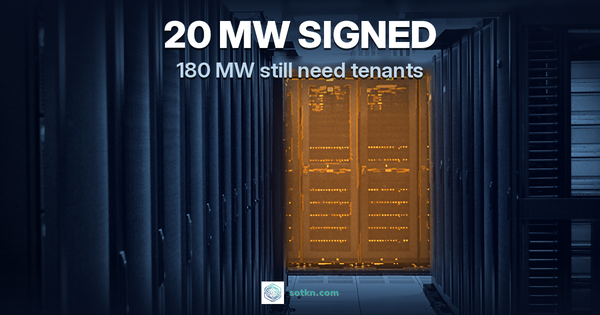
| 137 MW | Eight data centers running. The 2030 mark is 318+ MW. About 180 MW is in development in Ulsan and Seoul | This quarter's bill is the eight centers and the cable. The next halls are not in it |
The data-center line fell KRW 10.1 billion from June, the printed 7.4%, and rose KRW 7.3 billion from a year earlier. Mobile service rose KRW 6.3 billion from June, the printed 0.2%. Operating income dipped 2.4% from June, to KRW 552.3 billion, off a September 2025 base of KRW 48.4 billion. That base is last year's customer package, not a data-center result.
Depreciation was KRW 885.2 billion. Added to operating income it equals printed EBITDA of KRW 1,437.5 billion, a 32.0% margin. The line includes research depreciation and is not a data-center cost. It is 7.0 times the AI data-center sales line, a scale check only.
What does it actually do?
It sells mobile service, and it keeps a smaller infrastructure book beside that bill. The parent, on its own accounts, recorded KRW 3,156.3 billion of revenue and KRW 413.5 billion of operating income. SK Broadband recorded KRW 1,172.8 billion of revenue and KRW 134.7 billion of operating income. The two do not add to the group. Group revenue is KRW 168.2 billion higher than the parent plus SK Broadband. The briefing does not name the difference. It is other companies and eliminations, not a hidden GPU invoice.
Average revenue per user was KRW 29,297, against KRW 23,999 a year earlier, the printed 22.1% rise. The briefing ties the year-on-year jump in mobile revenue to last year's customer package, and to a change in marketing. From June the mobile bill rose 0.2%. The recovery was already in the run rate. This quarter the phone bill sat still.
SK Broadband's fixed-line, pay-TV and enterprise lines were KRW 305.5 billion, KRW 476.2 billion and KRW 278.8 billion. They are connection bills.
In July 2026 it set up SK Hyper to win data-center business. In August it approved a spin-off, SK Horizon, to run and expand the halls and the cables. The 4 November press release splits the jobs. SK Telecom keeps strategy, risk and partnerships. Hyper finds the customers. Horizon runs the buildings. Horizon is developing about 180 MW in Ulsan and Seoul. What exists today, on the briefing's picture, is 137 MW across eight centers and one cable, SJC2. The 2030 mark is 318 MW or more, by adding Ulsan and the Seoul metro area.
On our arithmetic, 318 minus 137 is 181. The press release's "about 180 MW" sits next to that gap. We do not add 180 on top of 318. They point at the same addition, and neither figure is revenue. This is not a neocloud. A neocloud's invoice is the GPU hour. Here the hour is a gap inside a line that is 2.8% of the group. The billing mechanic is the GPU hour.
How does it make money?
The phone subscriber pays first. Mobile service is more than half the group. SK Broadband's connection bills come next. The infrastructure line arrives last, and it arrives mixed.
AI data-center revenue of KRW 126.1 billion grew over the year, the company says, because the existing halls were used more and cable traffic grew. It fell from June because GPU-as-a-service revenue gapped during the move to new long-term contracts. Both claims share one number, so utilization, the cable and the GPU hour cannot be pulled apart. The drop is KRW 10.1 billion: 0.2% of group revenue and 7.4% of the line. The hour can leave the growth rate while the phone bill stays flat.
The services line, KRW 70.0 billion, rose 27.3% from a year earlier and 14.2% from June. The briefing thanks orders for the cloud business. Its footnote also lists contact centers, an AI factory offer, generative AI, marketing, the A. app, commerce and ads. A cloud order is in the pot. So is an ad. Together the two AI lines are KRW 196.1 billion, against KRW 197.5 billion in June. The services gain nearly offset the dip. That offset is not a GPU recovery.
Builders were paid KRW 148.6 billion for Hyper's development work, footnoted beside KRW 461.4 billion of telecom and broadband capex. Added, that is KRW 610.0 billion. The sum is ours, and it is not a data-center budget. Shareholders were set KRW 830 a share, KRW 176.8 billion, record date 30 November 2026. The payout can still change. KRW 176.8 billion is 42.8% of profit to owners. The full-year policy uses an adjusted profit the briefing does not print, so 42.8% is not a score against it. Bonds and long-term borrowings were KRW 6,464.0 billion, down KRW 1,118.6 billion from June, beside KRW 130.0 billion short-term. Debt went down.
Operating income of KRW 552.3 billion is what remains after operating costs, a 12.3% margin. It is not a GPU margin, because the hour is not a line. Cost of goods sold was KRW 371.3 billion, up from KRW 265.9 billion in June, and the briefing does not say what moved it. We do not read that jump as the cost of the dark hour. The silence runs both ways. The company shows neither the GPU revenue nor the GPU cost.
What limits it?
Two clocks, and a ledger that will not separate them.
The first clock is the hour on the book that already bills. The briefing says the quarterly decline is due to a gap in GPU-as-a-service revenue while contracts move long-term. It does not say how many won, how many contracts, or when the new ones start. KRW 10.1 billion is the whole line's move, not a measured GPU invoice. The company's sentence is the attribution. It is not a warrant to treat KRW 10.1 billion as the size of the hole.
The second clock is the next megawatt. The November release says Hyper is discussing terms with potential customers, focused on Ulsan, and will build faster on sites it already holds once those agreements are final. Discussions are the company's word for terms that are not finished.
Those talks are not the AWS signing. On 20 June 2025 SK Group and AWS held a ceremony for an AI Zone in Ulsan. The newsroom release of 22 June 2025 says SK Group will lead construction, AWS will establish the zone and deliver the cloud, and operations are expected to begin in 2027. It is a 15-year partnership. The release also names SK hynix on the project. That memory invoice is a different company, what SK hynix does. The cloud inside the zone, once it runs, is Amazon's bill.
The June 2025 release gives the hall no megawatt and no price. It mentions a separate AWS plan of US$5.88 billion for Korea by 2027 and says the partnership is in addition to that plan. We do not use that sum as the building's price. The November briefing does not mention AWS and does not put Ulsan inside the KRW 126.1 billion. A 2027 hall is not in a September invoice. The line also includes cable traffic, so it is not a pure GPU figure even before the gap.
Cash is not the limit. KRW 2,208.1 billion covers the quarter's Hyper spend about 14.9 times, and the telecom and broadband capex about 4.8 times. Plant and intangibles were KRW 14,544.5 billion, down KRW 146.0 billion from June. Capex minus depreciation does not equal that change, and we do not invent a bridge. The jump from last year's KRW 48.4 billion of operating income is the package base. The stuck piece is the GPU-hour sentence, not the headline profit.
Who else does this?
The Korea door already sets this quarter beside the other builders. Who already has a tenant lines SK Telecom up with KT, LG Uplus and Samsung SDS. That note asks which new megawatts have a customer. This page asks how SK Telecom's ledger pays, and why the GPU hour cannot be lifted out of it.
Naver is the other Korean name on this shelf, a platform rather than a mobile network. The Wire on Naver's GPU rental is a signed hour. On the neocloud shelf the hour is the whole company. Here it can go dark and the phone bill can still look recovered.
What would change this view?
- Easing. A later document prints the GPU hour on its own and shows it billing again, or it says the Ulsan terms are signed and names who pays, with a date and a figure.
- Tightening. The data-center line falls again and the gap is still only a sentence, or a company release moves the 2027 start.
- A cleaner ledger. Horizon is separated and the hall, the cable and the GPU hour land on their own lines. The August approval is the decision to separate. It is not the separated accounts.
Until a later document sizes the hour or signs the open terms, those two sentences stay apart, and the phone bill stays the thing that paid.
Practical takeaways
- Read September as a phone bill that had already recovered. Mobile service rose 0.2% from June. Operating income fell 2.4%.
- Read KRW 126.1 billion as halls plus cable traffic, minus a GPU hour the company will not show.
- Keep KRW 148.6 billion as the data-center development spend. Leave KRW 461.4 billion on the phone and broadband network.
- Keep the June 2025 AWS signing and the November "discussions" side by side. One is a hall aimed at 2027. The other is terms the company still calls unfinished. Neither has a won price on this page.
- Do not use cash, or the jump from last year's KRW 48.4 billion, as the test of whether the GPU hour is stuck.
FAQ
What does SK Telecom do?
It runs a Korean mobile network and, beside that, data centers, a submarine cable and a GPU hour. Mobile service was KRW 2,569.7 billion in the quarter to 30 September 2026, 57.1% of group revenue on our arithmetic.
Why did the AI data-center line fall?
It was KRW 126.1 billion, up 6.2% from a year earlier and down 7.4% from June. The company credits fuller halls and cable traffic for the yearly rise, and a gap in GPU-as-a-service revenue for the quarterly drop. It does not print the hour on its own.
How much of SK Telecom is the data center?
The AI data-center line is 2.8% of group revenue on our arithmetic. AI services add KRW 70.0 billion, and that line mixes cloud orders with ads, commerce and the A. app.
Has Amazon signed the Ulsan hall?
SK Group and AWS signed on 20 June 2025 for an Ulsan AI Zone that AWS will run, with operations expected in 2027. The 4 November 2026 release still says customer terms are under discussion. It does not say those talks are the AWS contract, and it gives the hall no price.
Is cash the limit?
No. Cash and short-term instruments were KRW 2,208.1 billion. The stuck step is the unsplit GPU hour, and customer terms the November release still calls discussions.
Is this a recommendation to invest in SK Telecom?
No. This page explains how SK Telecom gets paid and where the chain is stuck. It gives no buy or sell calls. Not investment advice. Do your own research.
Keep reading on the map
Layer: Hyperscalers on The Stack. The Korea door is Markets: Korea. Also on the shelf: Naver. Explained: what a hyperscaler is and the GPU hour.
Get the Wire — short notes when the bills around compute move.
Not investment advice. Do your own research.
How we check this
Figures come from SK Telecom's briefing and press release of 4 November 2026, and from the 22 June 2025 newsroom note on the Ulsan partnership. The briefing says the figures are unaudited K-IFRS estimates. The GPU hour is not published on its own. Sums and ratios are our arithmetic. Who gets paid, and the stuck step, are our read.
Last reviewed: 23 Nov 2026 · Next review: when SK Telecom next reports the AI data-center line, or sooner if it prints the GPU hour or says the Ulsan terms are signed
Spot an error? Tell us and we will correct it and note the change here.
Sources
- SK Telecom — Investor briefing, Q3 2026 (4 Nov 2026) — results, the AI lines, capex and the Hyper footnote, capacity, the dividend, and the unaudited balance sheet
- SK Telecom — Q3 2026 press release (4 Nov 2026) — Hyper and Horizon, about 180 MW in Ulsan and Seoul, and customer terms still in discussion
- SK Telecom newsroom — SK Group and AWS on an Ulsan AI Zone (22 June 2025) — signing on 20 June 2025, who builds, who runs the zone, operations expected in 2027
S
Writes Second Order by TKN on who gets paid, where money sticks, and which step is stuck.