Who Makes IC Substrates? The Board Under the AI Chip
Ajinomoto sells the ABF film. Ibiden, Unimicron and Nan Ya PCB sell the board under the AI chip. The stuck step is a qualified high-end substrate.
EXPLAINED · Players · Last reviewed: 5 Nov 2026 · Next review: after Nan Ya PCB’s November revenue (by 10 Dec 2026) and Ibiden’s next quarterly print (late Jan 2027)
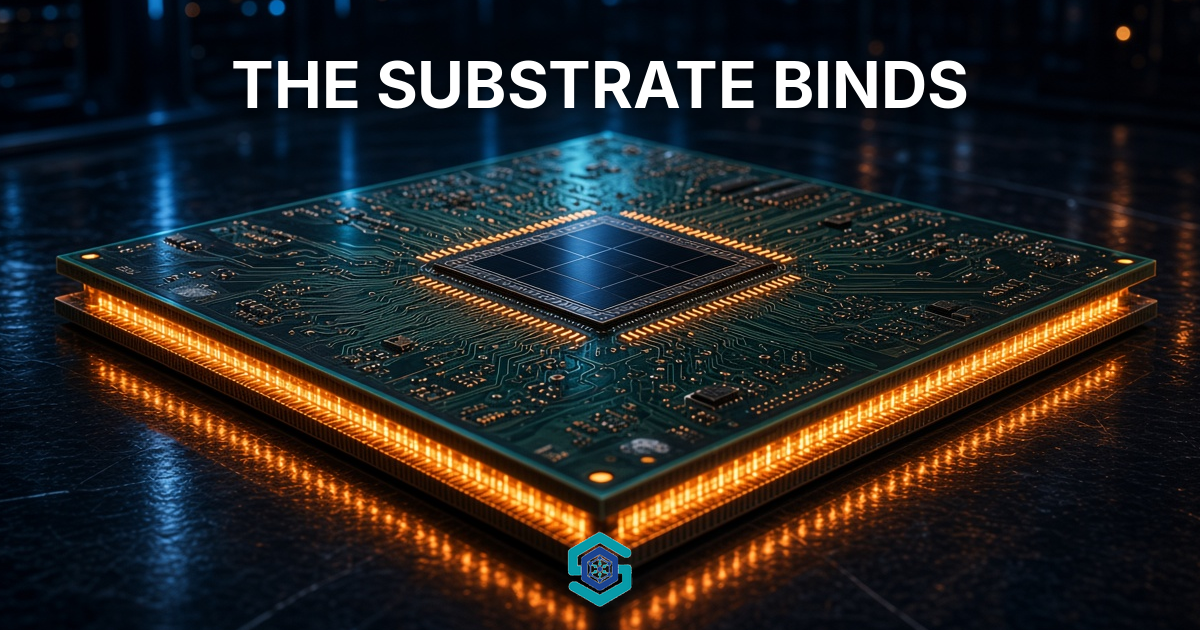
An IC substrate is the small board inside a chip package. It carries the silicon die and wires that die out to the larger circuit board. ABF is not that board. ABF is the insulating film layered inside it.
In short. Ajinomoto sells the film. Ibiden, Unimicron and Nan Ya PCB sell finished boards. In the quarter to June 2026 Ajinomoto’s functional-materials sales were ¥33.1 billion, and the company said ABF for AI, server and network boards was strong. In the half to September 2026 Ibiden’s Electronics segment took in ¥172,540 million. Unimicron’s September revenue was NT$18.65 billion. Nan Ya PCB’s October revenue was NT$6,289 million. The stuck step is a qualified high-end substrate. New Ibiden lines named in October do not start volume output until fiscal 2027 and fiscal 2029.
A wafer is not a shippable AI chip until a substrate is under the package. A free packaging slot with no matched board is still an unfinished module. The mechanism — what the film is, and why it sits beside CoWoS — is in IC substrates and ABF.
What is an IC substrate?
Three layers, from the inside out. The silicon die does the computing. The IC substrate sits under that die, inside the package, and fans the die’s tiny contacts out to a grid of solder balls. The motherboard is the larger board those balls land on. All three look like green boards with copper. They are paid for at different steps.
High-end substrates for CPUs, GPUs and switch chips are built in many layers. Each layer needs an insulator, then copper. On most high-performance boards that insulator is a film. Ajinomoto calls it ABF, Ajinomoto Build-up Film, and says it has been the film between build-up layers since 1999. In its September 2026 introductory presentation the company says ABF has more than a 95% share of insulating films for high-performance semiconductors. That is Ajinomoto’s figure, not an independent census. The same presentation says substrates get larger and gain layers as AI chips evolve, and that ABF use per substrate rises with them.
Ibiden’s deck of 30 October 2026 marks the same direction: substrate size from 80 by 80 millimetres toward 130 by 130, and build-up stacks from 9-X-9 toward 14-X-14. Those are development markers, not a shipment count.
Who makes the film, and who makes the board?
Four names have dated prints below. One sells film. Three sell boards. A board maker’s revenue line is not a pure ABF line, because these companies also sell other circuit boards.
| Player | Role | Latest dated print |
|---|---|---|
| Ajinomoto (Japan) | ABF film, the insulator inside the board. Not the finished substrate | Apr–Jun 2026 functional-materials sales ¥33.1bn, from ¥21.5bn (6 Aug 2026). Company: ABF strong for AI, server and network boards |
| Ibiden (Japan) | High-end IC package substrates. Electronics segment | Half to 30 Sep 2026: Electronics sales ¥172,540m, segment profit ¥50,028m (filed 29 Oct 2026) |
| Unimicron (Taiwan) | IC carriers, including flip-chip BGA, plus other circuit boards | Sep 2026 consolidated revenue NT$18.65bn, +64.67% year on year (TWSE, published 17 Oct 2026) |
| Nan Ya PCB (Taiwan) | IC substrates and PCBs. ABF lines at Kunshan since 2021 and Shulin since 2022 | Oct 2026 consolidated revenue NT$6,289m, against NT$3,706m in Oct 2025 (company table) |
Ajinomoto results and deck, 6 Aug 2026, and its September 2026 introduction; Ibiden results, 29 Oct 2026, and deck, 30 Oct 2026; Taiwan Stock Exchange monthly file for 欣興 (3037); Nan Ya PCB monthly table and H1 briefing, 27 Aug 2026. Roles, not a ranking.
Ajinomoto does not print the board. Functional materials — electronic materials and others, which includes ABF plus other products — did ¥33.1 billion of sales and ¥19.1 billion of business profit in the quarter to 30 June 2026, against ¥21.5 billion and ¥10.8 billion. The company calls that 154% and 177% of the year-earlier quarter, says ABF for AI, server and network boards stayed strong, and raised its fiscal-2026 forecast for the line by ¥9.0 billion of sales and ¥5.0 billion of profit. The ¥33.1 billion is not ABF alone.
Ibiden sells the finished high-end board. For the half to 30 September 2026, consolidated net sales were ¥262,546 million, up 34.3%, and operating profit ¥60,116 million, up 84.6%. Electronics, the segment it ties to IC package substrates, was ¥172,540 million of sales and ¥50,028 million of segment profit. Filed 29 October 2026.
Unimicron, 欣興 (3037), describes flip-chip BGA substrates on its own technology page. The Taiwan Stock Exchange file published 17 October 2026 shows September consolidated revenue of NT$18,650,679 thousand, against NT$11,326,339 thousand, a change the file states as 64.67%. January through September was NT$132,986,108 thousand, up 37.74% on that file. The company’s note: capacity and customer demand increased. The figure is the whole company.
Nan Ya PCB’s history dates ABF production to Kunshan in 2021 and Shulin in 2022. Its table, in millions of New Taiwan dollars, shows October 2026 at 6,289 and October 2025 at 3,706. Our arithmetic: 6,289 ÷ 3,706 − 1 = 69.7%. The half briefed on 27 August was NT$24.8 billion, up 37.2%, which the company ties to data-centre demand and high-end IC substrates. Second-quarter revenue was up 21.5% on substrates for 1.6T switches, and first-half operating profit was NT$3,852.4 million higher than a year earlier. Those prints mix substrates and other PCBs.
Why does a substrate bind?
The board has to get bigger, and gain layers, while the qualified lines that can build it stay scarce. Ibiden’s 30 October 2026 deck says that as IC package substrates become larger and more multilayer, total demand for its semi-additive process is expected to significantly exceed the industry’s supply. Semi-additive process, SAP, is how the fine copper lines are built. It is what separates a high-end substrate from an ordinary circuit board.
The same slide is a company forecast, based on customer information, for calendar 2026 to calendar 2030. For AI GPUs and AI ASICs the indexes are market 1.8 times, production load 3.0 times, SAP demand 5.4 times. Our arithmetic: 1.8 × 3.0 = 5.4. The demand index is a bigger market times a heavier process load per board. A capacity chart on that page is marked Japan only. The 5.4 times is a demand index in a forecast. It is not a count of idle plants, and it is not a shortage measured this quarter.
That is why a packaging headline can look fine while modules still wait. CoWoS places the compute die and the memory on a shared base and then onto a substrate. No qualified substrate, and the attach slot has nothing finished to ship. Our read: the substrate and the packaging slot are neighbours. Either can bind, on a different clock. See who makes advanced packaging and what CoWoS is.
Who gets paid — and where is the stuck step?
Ajinomoto is paid when the film ships. The substrate maker is paid when the board ships: Unimicron’s September file, Nan Ya PCB’s October table, and Ibiden’s Electronics profit are that step. The packager is paid when a finished module is accepted. Builders are paid when a line is ordered, which can be years before the line ships a board.
On 29 October 2026 Ibiden’s board approved about ¥151 billion more, mainly at Gama Cell 6, with mass production planned from fiscal 2029 for CPU substrates as AI moves toward inference. The filing says the effect on this fiscal year should be immaterial. The next day’s deck calls it ¥150 billion on top of ¥220 billion already announced at Cell 6, labelled there for AI ASIC substrates, and points to Ono Cell 8 — ¥280 billion previously announced, AI GPU substrates, start fiscal 2027. Our read: the October money does not add shippable boards this fiscal year.
The stuck step is the qualified high-end substrate, not the film shipment and not the wafer start. Film can be selling well, as Ajinomoto says it is, while the line that can use that film on a named AI SKU is still full. Ibiden says it intends to keep what it calls the top share of the high-end market by adding capacity. That is the company’s claim. It is not our ranking.
What would change the view?
Three dated checks. Nan Ya PCB says it publishes monthly revenue by the 10th, so November’s figure is due by 10 December 2026, alongside Unimicron’s next file. If those prints roll over and the companies stop citing demand, the short clock has cooled. Ibiden’s next print covers the quarter ending 31 December 2026. Last time the half-year print came on 29 October, so expect late January 2027. Listen for whether SAP demand still exceeds supply, and whether the fiscal-2027 and fiscal-2029 starts are intact. Any Ajinomoto update that counts ABF alone, or walks back the 95% film-share claim, would rewrite the film line.
A price cut on high-end boards, said by the company that sells them, would loosen the bind. A delay to Ono or Gama would lengthen it. CapEx guidance by itself does neither. The start date is the clock.
Common misconceptions
- People hear ABF and think it is the substrate. ABF is the insulating film inside the substrate. Ajinomoto sells the film. Ibiden, Unimicron and Nan Ya PCB sell the board.
- People treat the substrate as the motherboard. The substrate is inside the chip package. The motherboard is the larger board the package plugs into.
- People read a substrate maker’s monthly revenue as ABF sales. Unimicron’s NT$18.65 billion and Nan Ya PCB’s NT$6,289 million are consolidated revenue. Both companies also sell other circuit boards.
- People treat Ibiden’s 5.4 times as this quarter’s shortage. It is the company’s index for AI GPU and ASIC SAP demand in calendar 2030 against calendar 2026. It equals a bigger market times a heavier process load.
- People treat new substrate CapEx as open supply now. Ibiden’s October addition is aimed at fiscal 2029. The GPU line already on the books aims at fiscal 2027. The filing says this year’s profit is not moved by the new money.
FAQ
What is an IC substrate?
An IC substrate is the small board inside a chip package. It connects the silicon die to the larger circuit board. It is not the motherboard, and it is not the ABF film layered inside it.
What is ABF?
ABF is Ajinomoto Build-up Film, the insulating film between the copper layers of a high-end substrate. Ajinomoto sells the film. Substrate makers such as Ibiden and Nan Ya PCB sell the finished board.
Who makes IC substrates for AI chips?
Ibiden in Japan, and Unimicron and Nan Ya PCB in Taiwan, are the board makers with dated 2026 prints in this piece. Ajinomoto supplies the ABF film those boards use. This is a roles map, not a ranking and not a price target.
Who gets paid first on an IC substrate?
Ajinomoto is paid when the film ships. The substrate maker is paid when the board ships. The packager is paid later, when the finished module is accepted. Ibiden’s new lines named in October 2026 are planned to start volume output in fiscal 2027 and fiscal 2029, not this fiscal year.
Where is the stuck step in IC substrates?
The qualified high-end substrate. On 30 October 2026 Ibiden said total demand for its semi-additive process is expected to exceed the industry’s supply as boards get larger and gain layers. A free packaging slot without a matched substrate is still an unfinished module.
Is this a list of stocks to buy?
No. This page maps who does the work and when the cash moves. It is not a buy or sell call.
Related terms
- IC substrates and ABF — the mechanism: film versus board, and why a free packaging slot can still wait.
- CoWoS — the captive attach step that still needs a substrate under the module.
- Who makes advanced packaging — who is paid at the next step, after the board.
- Interposer — the layer some packages add beside the substrate.
- Who makes HBM — the memory stack that has to match the package.
Markets and stack doors
Layer: Semiconductors. The film and the board are sold into the chip before the package ships. Markets: Taiwan, where Unimicron and Nan Ya PCB file. Japan is where Ajinomoto and Ibiden print, and this site has no Japan markets door. Analysis: if substrates stay short into 2028, where the cash sticks.
Get the Wire — short daily notes when substrate revenue, SAP commentary or those plant start dates move. Not investment advice.
How we check this
Yen figures are from Ajinomoto’s 6 August 2026 results and deck, and from Ibiden’s 29 October 2026 results. The 5.4 times index and the plant start years are from Ibiden’s 30 October 2026 deck. Unimicron’s September revenue is the Taiwan Stock Exchange file published 17 October 2026. Nan Ya PCB’s October revenue is its own monthly table, read 5 November 2026. Half-year comparisons are its English briefing of 27 August 2026. The 69.7% change and the 1.8 × 3.0 = 5.4 check are our arithmetic. Where we judge how the steps fit, the wording says “our read”. Mixed revenue lines are marked. This page is not a buy or sell call.
Last reviewed: 5 Nov 2026 · Next review: after Nan Ya PCB’s November revenue (by 10 Dec 2026) and Ibiden’s next quarterly print (late Jan 2027)
Spot an error? Tell us and we will correct it and note the change here.
Sources
- Ajinomoto Q1 results, quarter ended 30 June 2026 (6 Aug 2026)
- Ajinomoto FY2026 forecast deck (6 Aug 2026) — ABF for AI, server and network boards; 154% and 177%
- Ajinomoto company introduction (September 2026) — the 95% film-share claim
- Ibiden consolidated results, half ended 30 Sep 2026 (29 Oct 2026) — Electronics segment; ¥151 billion at Gama
- Ibiden results deck (30 Oct 2026) — SAP indexes; Cell 6 and Cell 8 start years
- Taiwan Stock Exchange monthly revenue, September 2026 (published 17 Oct 2026) — 欣興 3037
- Unimicron FCBGA technology page
- Nan Ya PCB monthly revenue table — October 2026 and October 2025
- Nan Ya PCB H1 2026 briefing (27 Aug 2026) — NT$24.8 billion, 1.6T substrates, ABF start years